LogBook

Molds & Dies

  • Design
    Punching Die Cutting Force Calculator
    Plastic Injection Molding Clamping Force Calculator Plastic's Shrinkage Table
    Aluminum Extrusion Die Bearing Length Calculator Aluminum Extrusion Troubleshooting
    High-Pressure Die Casting Clamping Force Calculator High-Pressure Die Casting Draft Angle Calculator
    High-Pressure Die Casting Troubleshooting
  • Machining
    Milling Cutting Conditions Calculator
    EDM Wirecut Cutting Speed/Time Calculator
    Material's Hardness Converter Table
    Machining Troubleshooting
  • RFM
  • About
  • Contact
Search
Sectors
  • Additive Manufacturing (6)
  • Aluminum Extrusion (7)
  • Die Casting (6)
  • General (6)
  • Machining (7)
  • Plastic Injection (6)
  • Sheet Metal (9)
Latest Article
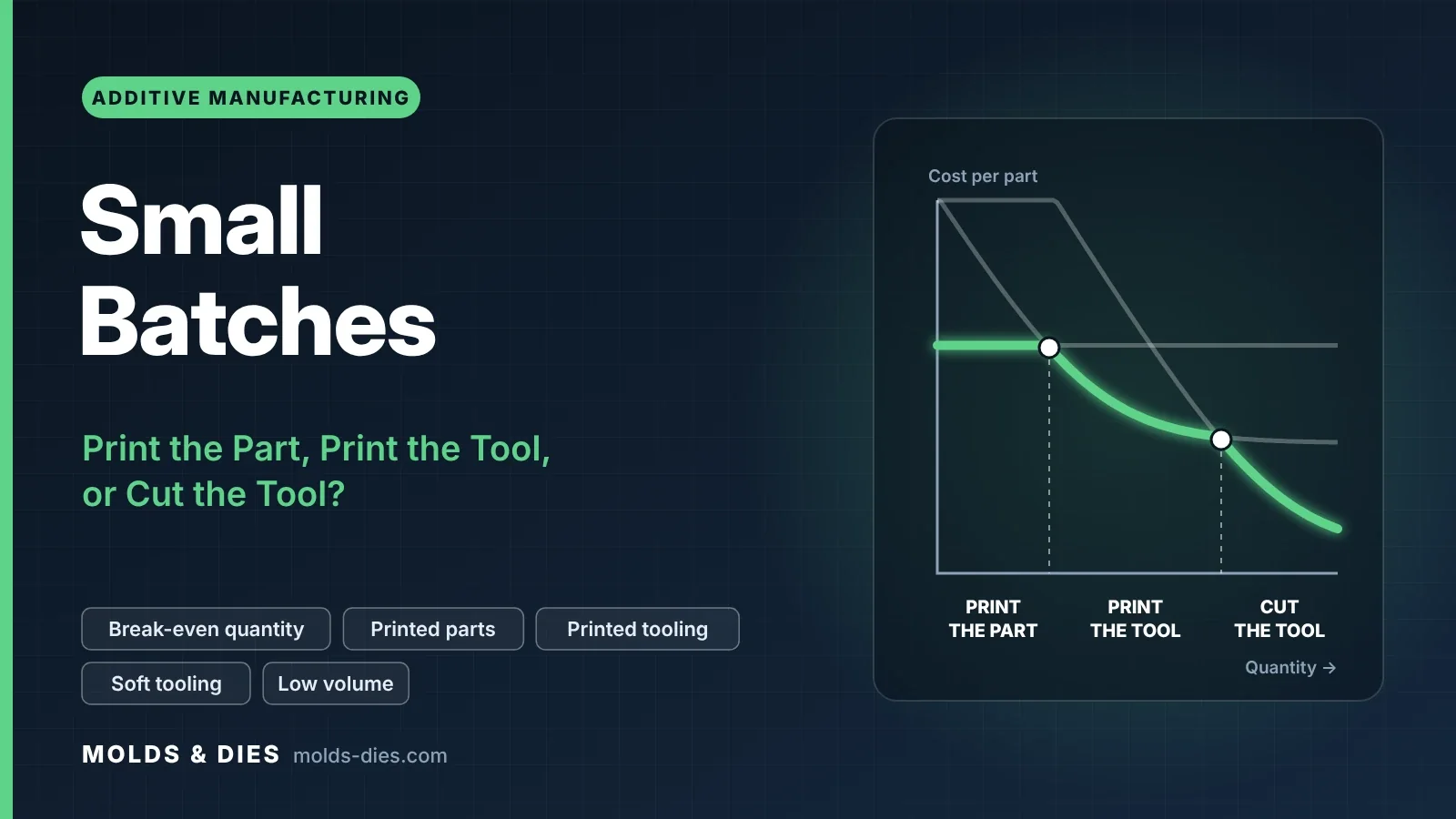
  • Small Batches: Print the Part, Print the Tool, or Cut the Tool?
    Oct. 9, 2026, 6:19 a.m.
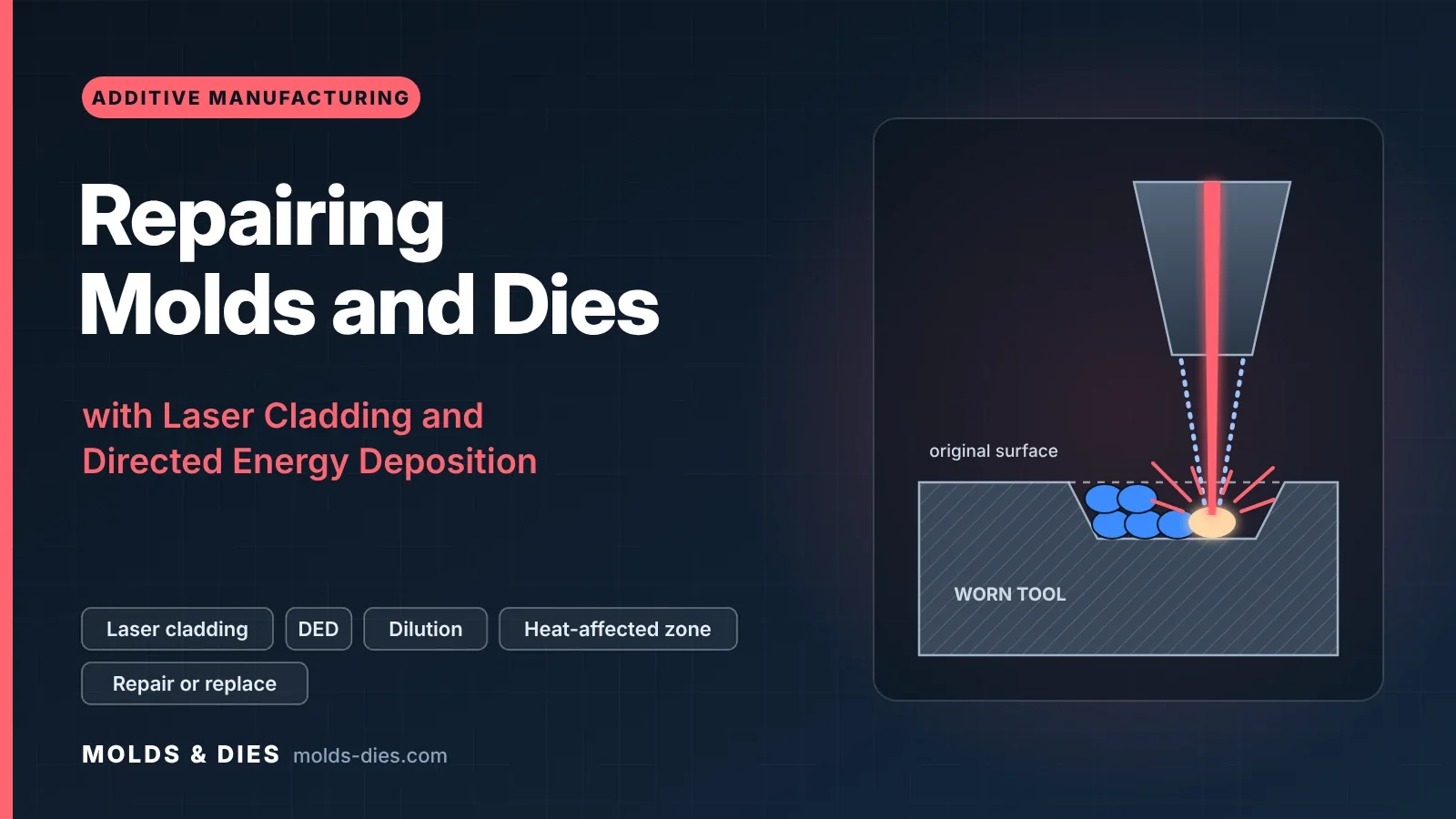
  • Repairing Molds and Dies with Laser Cladding and Directed Energy Deposition
    Oct. 9, 2026, 6:17 a.m.
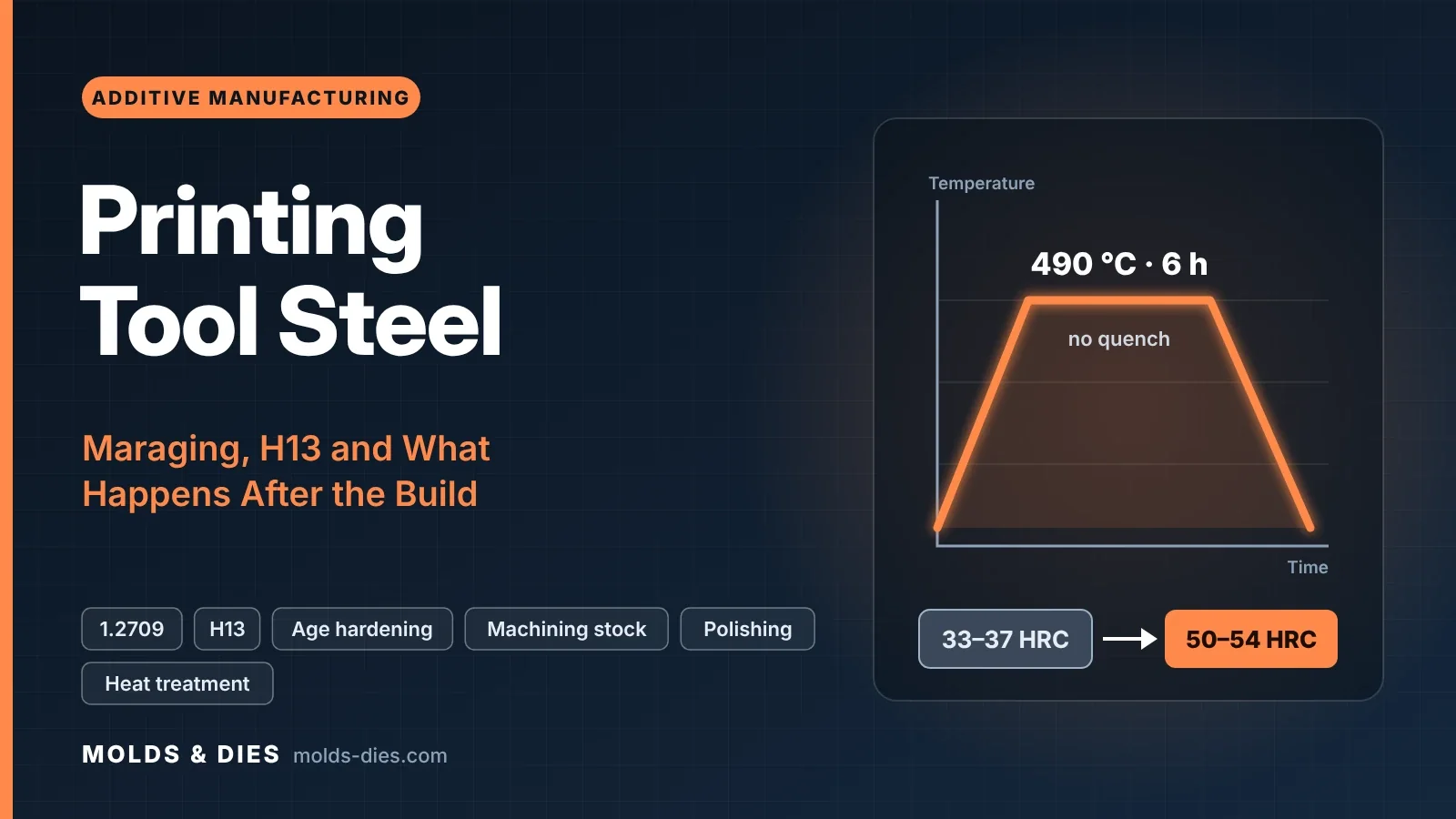
  • Printing Tool Steel: Maraging, H13 and What Happens After the Build
    Oct. 9, 2026, 6:16 a.m.
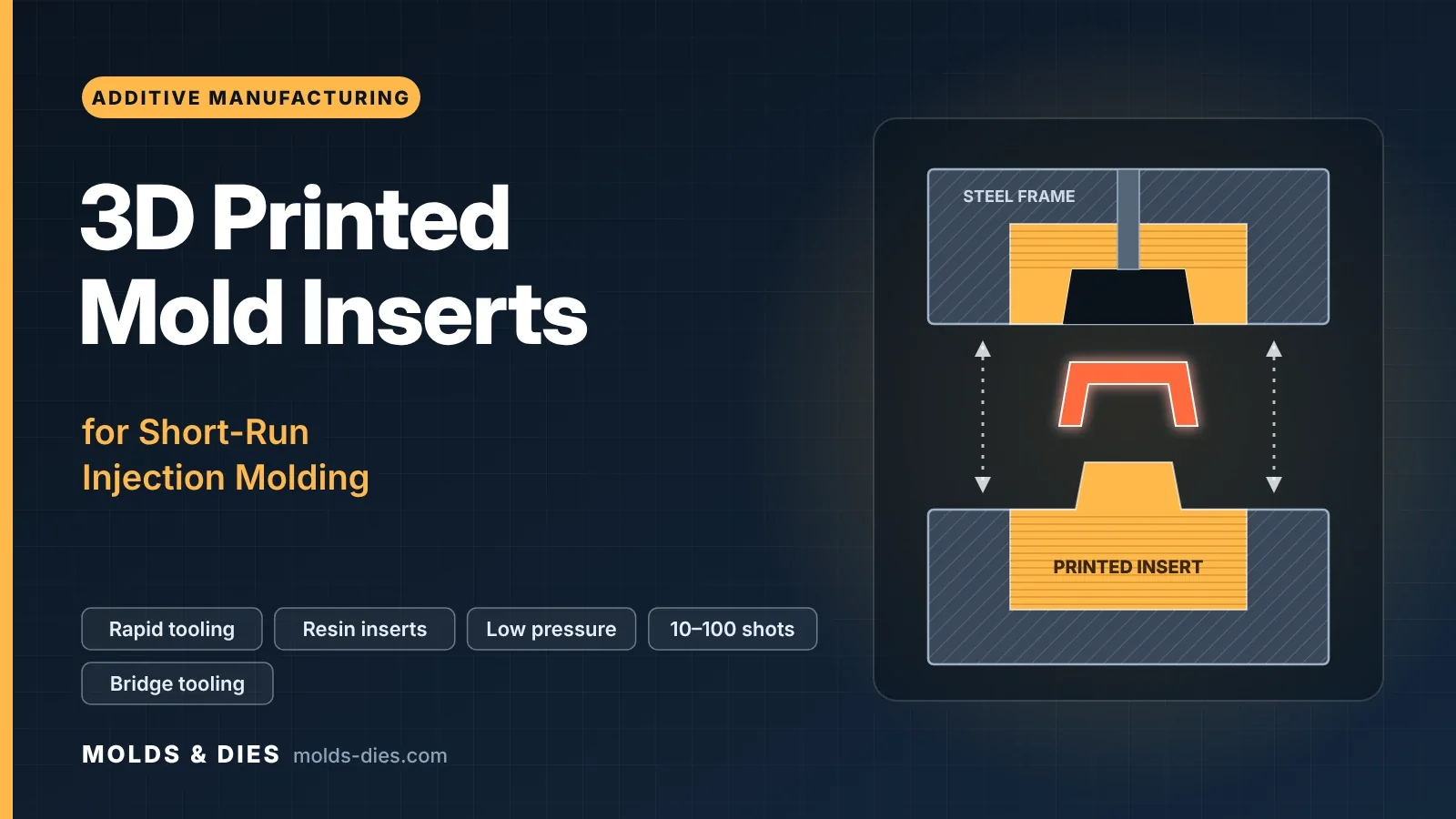
  • 3D Printed Mold Inserts for Short-Run Injection Molding
    Oct. 9, 2026, 6:15 a.m.
Small Batches: Print the Part, Print the Tool, or Cut the Tool?

Small Batches: Print the Part, Print the Tool, or Cut the Tool?

  • Mohamed Aboelfotouh Mohamed Aboelfotouh
  • Sector : Additive Manufacturing
  • Oct. 9, 2026, 6:19 a.m.

For a few hundred parts there are three ways to produce them: print the parts directly, print a short-life tool and mold or form the parts in it, or cut a conventional tool. Each route has a different mix of fixed cost and cost per part, so each one wins ....

Continue Reading
Repairing Molds and Dies with Laser Cladding and Directed Energy Deposition

Repairing Molds and Dies with Laser Cladding and Directed Energy Deposition

  • Mohamed Aboelfotouh Mohamed Aboelfotouh
  • Sector : Additive Manufacturing
  • Oct. 9, 2026, 6:17 a.m.

A worn parting edge, a cracked die casting insert or a late engineering change does not always need a new insert. Material can be added to the existing steel and machined back to size. The method used to add it decides how much heat enters the tool, and h ....

Continue Reading
Printing Tool Steel: Maraging, H13 and What Happens After the Build

Printing Tool Steel: Maraging, H13 and What Happens After the Build

  • Mohamed Aboelfotouh Mohamed Aboelfotouh
  • Sector : Additive Manufacturing
  • Oct. 9, 2026, 6:16 a.m.

A printed steel insert is not finished when the build ends. It comes out of the machine welded to a plate, rough, stressed and, in most cases, not yet at working hardness. The steel grade decides how easily it prints, and the steps after the build decide ....

Continue Reading
3D Printed Mold Inserts for Short-Run Injection Molding

3D Printed Mold Inserts for Short-Run Injection Molding

  • Mohamed Aboelfotouh Mohamed Aboelfotouh
  • Sector : Additive Manufacturing
  • Oct. 9, 2026, 6:15 a.m.

A steel injection mold takes weeks and an aluminum prototype mold takes one to two weeks. A printed polymer insert can be on the machine the day after the design is released. It will not last long and it will not hold tight tolerances, but it produces rea ....

Continue Reading
Conformal Cooling in Injection Molds and Die Casting Inserts: Design Rules and Payback

Conformal Cooling in Injection Molds and Die Casting Inserts: Design Rules and Payback

  • Mohamed Aboelfotouh Mohamed Aboelfotouh
  • Sector : Additive Manufacturing
  • Oct. 9, 2026, 6:13 a.m.

Cooling takes more than half of a typical injection molding cycle, and it decides warpage, sink and dimensional stability. Drilled cooling lines are straight, so in a curved or deep cavity their distance to the surface changes from point to point. Conform ....

Continue Reading
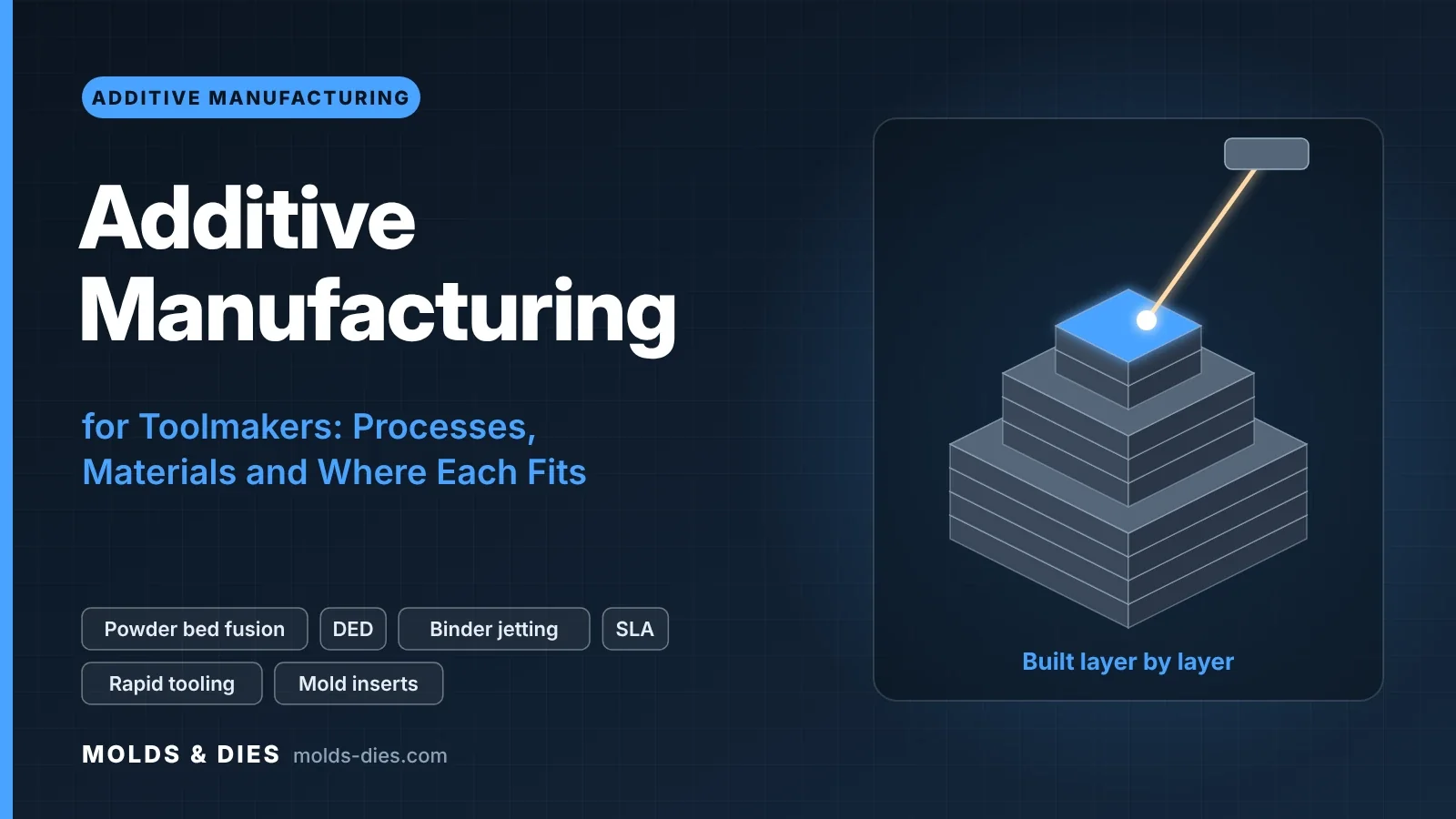
Additive Manufacturing for Toolmakers: Processes, Materials and Where Each Fits

Additive Manufacturing for Toolmakers: Processes, Materials and Where Each Fits

  • Mohamed Aboelfotouh Mohamed Aboelfotouh
  • Sector : Additive Manufacturing
  • Oct. 9, 2026, 6:10 a.m.

Additive manufacturing builds a part by adding material layer by layer instead of cutting it from a block. For a tool shop it is not a replacement for milling, EDM and grinding. It is a fourth capability that does three things the other machines cannot: i ....

Continue Reading
Preventive Maintenance Program for Molds and Dies

Preventive Maintenance Program for Molds and Dies

  • Mohamed Aboelfotouh Mohamed Aboelfotouh
  • Sector : General
  • Oct. 2, 2026, 6:42 p.m.

A mold or die that fails in the press stops production, damages itself further while it fails, and has to be repaired under time pressure. Most of those failures give warning: a vent filling up, a spring losing force, a punch edge rounding, a water channe ....

Continue Reading
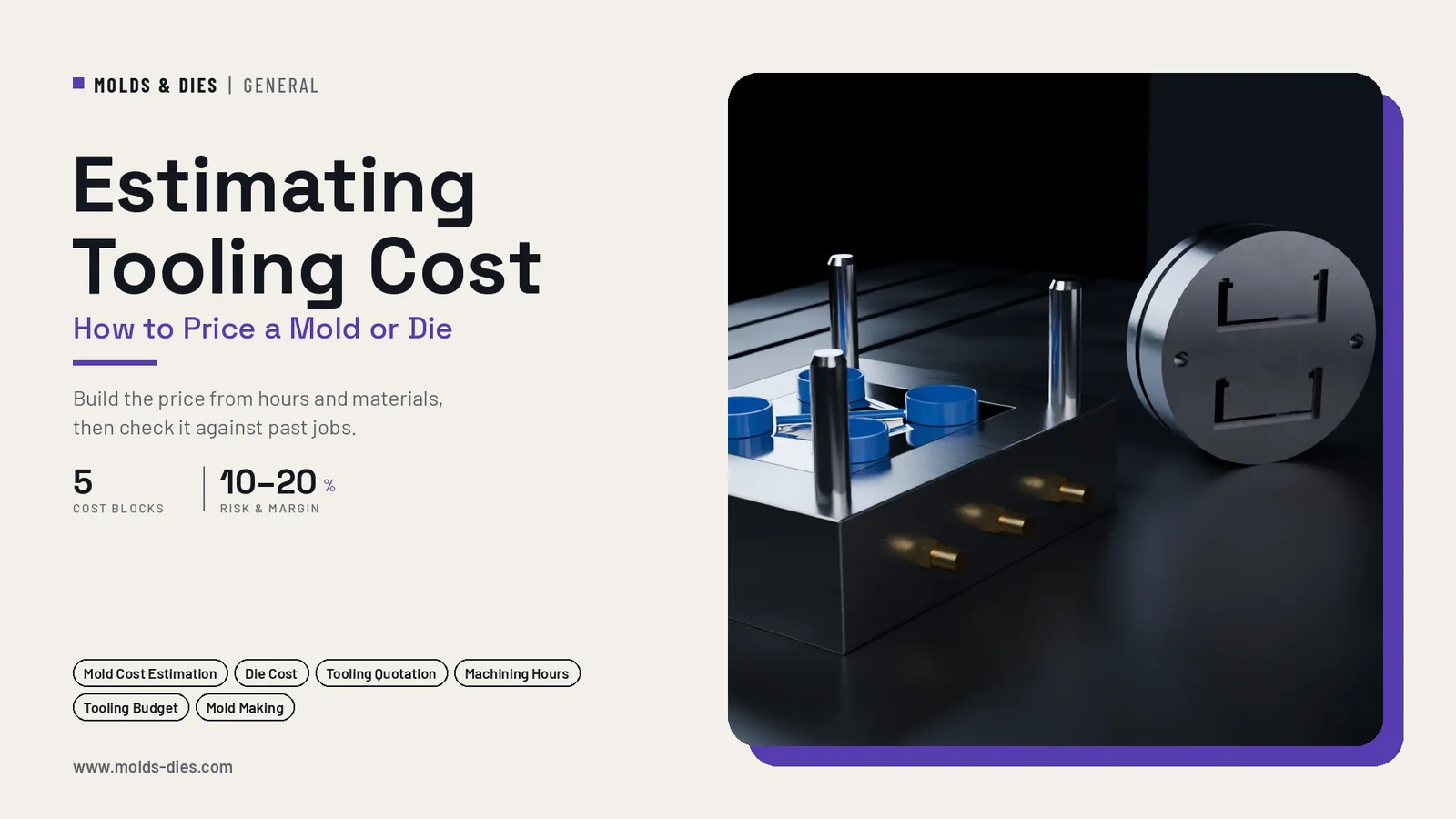
How to Estimate the Cost of a Mold or Die

How to Estimate the Cost of a Mold or Die

  • Mohamed Aboelfotouh Mohamed Aboelfotouh
  • Sector : General
  • Oct. 2, 2026, 6:42 p.m.

A tooling quotation is a forecast of hours and purchases for a product that does not exist yet. Estimate too low and the job loses money; too high and it goes to a competitor. Buyers face the mirror image: without knowing how a price is built, they cannot ....

Continue Reading
Surface Treatments for Tooling: Nitriding, PVD and When Each Fits

Surface Treatments for Tooling: Nitriding, PVD and When Each Fits

  • Mohamed Aboelfotouh Mohamed Aboelfotouh
  • Sector : General
  • Oct. 2, 2026, 6:42 p.m.

Tool steel alone cannot always resist the wear, sticking and corrosion that molds and dies meet in service. A surface treatment adds a thin layer that is harder, slides better, or resists chemical attack. The common treatments differ greatly in hardness, ....

Continue Reading
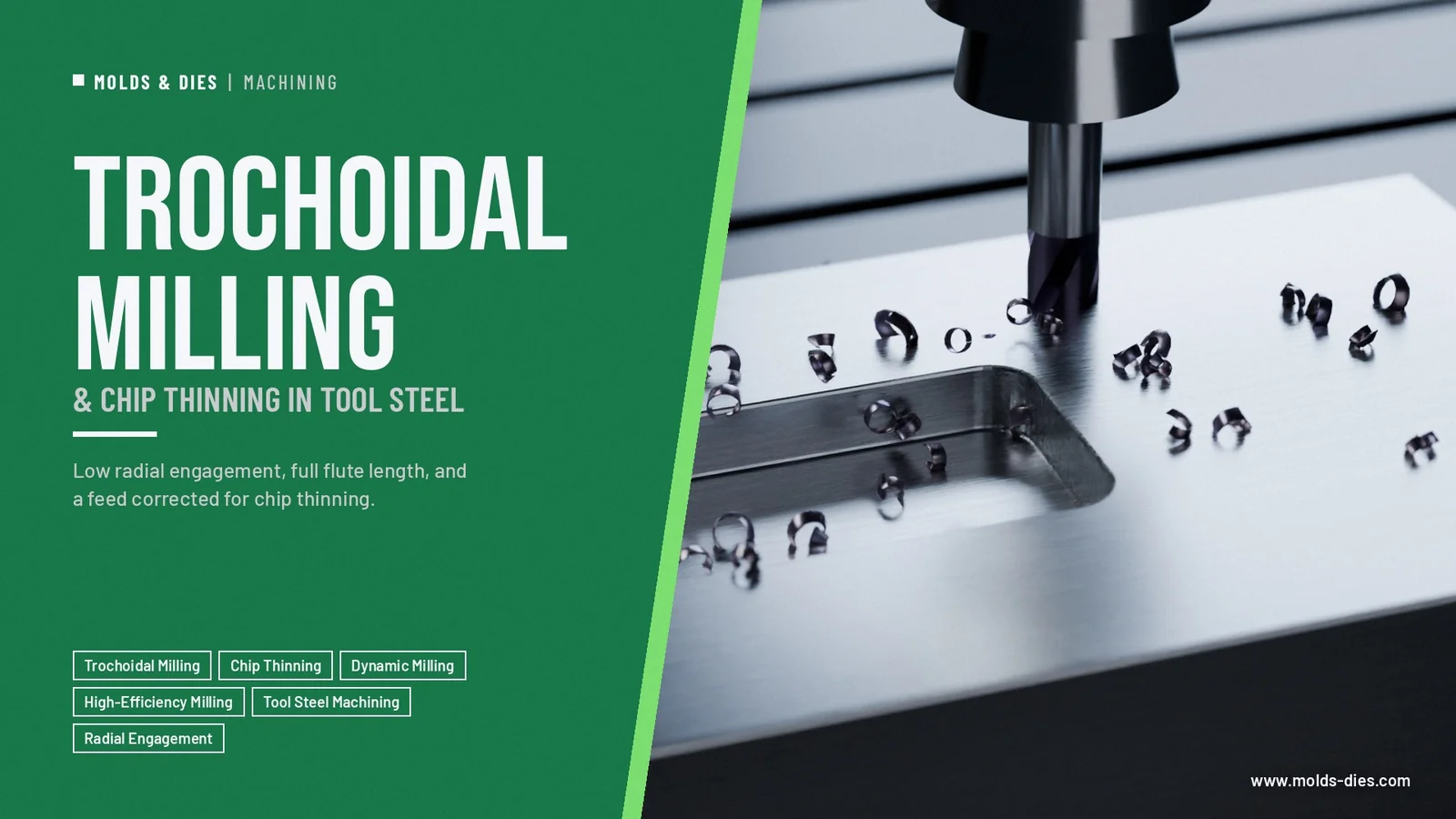
Trochoidal Milling and Chip Thinning in Tool Steel

Trochoidal Milling and Chip Thinning in Tool Steel

  • Mohamed Aboelfotouh Mohamed Aboelfotouh
  • Sector : Machining
  • Oct. 2, 2026, 6:41 p.m.

Conventional roughing of tool steel uses a wide radial cut and a shallow depth. Only the bottom few millimetres of the cutter do the work, they do it under high load and heat, and the tool is worn out while most of its flute length is still new. Trochoida ....

Continue Reading
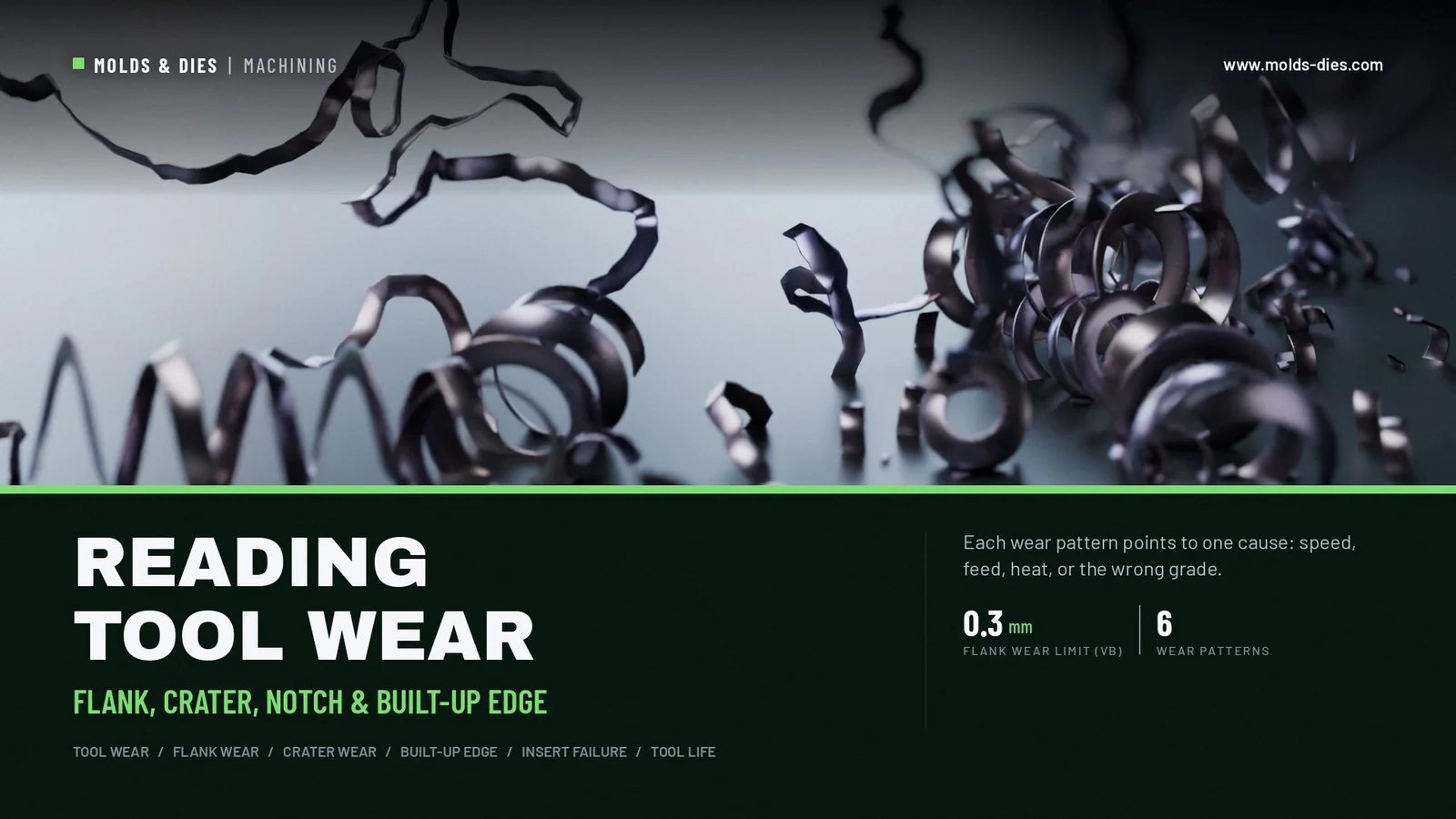
Reading Tool Wear: Flank, Crater, Notch and Built-Up Edge

Reading Tool Wear: Flank, Crater, Notch and Built-Up Edge

  • Mohamed Aboelfotouh Mohamed Aboelfotouh
  • Sector : Machining
  • Oct. 2, 2026, 6:41 p.m.

A used cutting edge is a record of what happened in the cut. The position and shape of the wear show whether the speed was too high or too low, whether the grade was too hard or too soft, and whether heat or mechanical load did the damage. Machinists who ....

Continue Reading
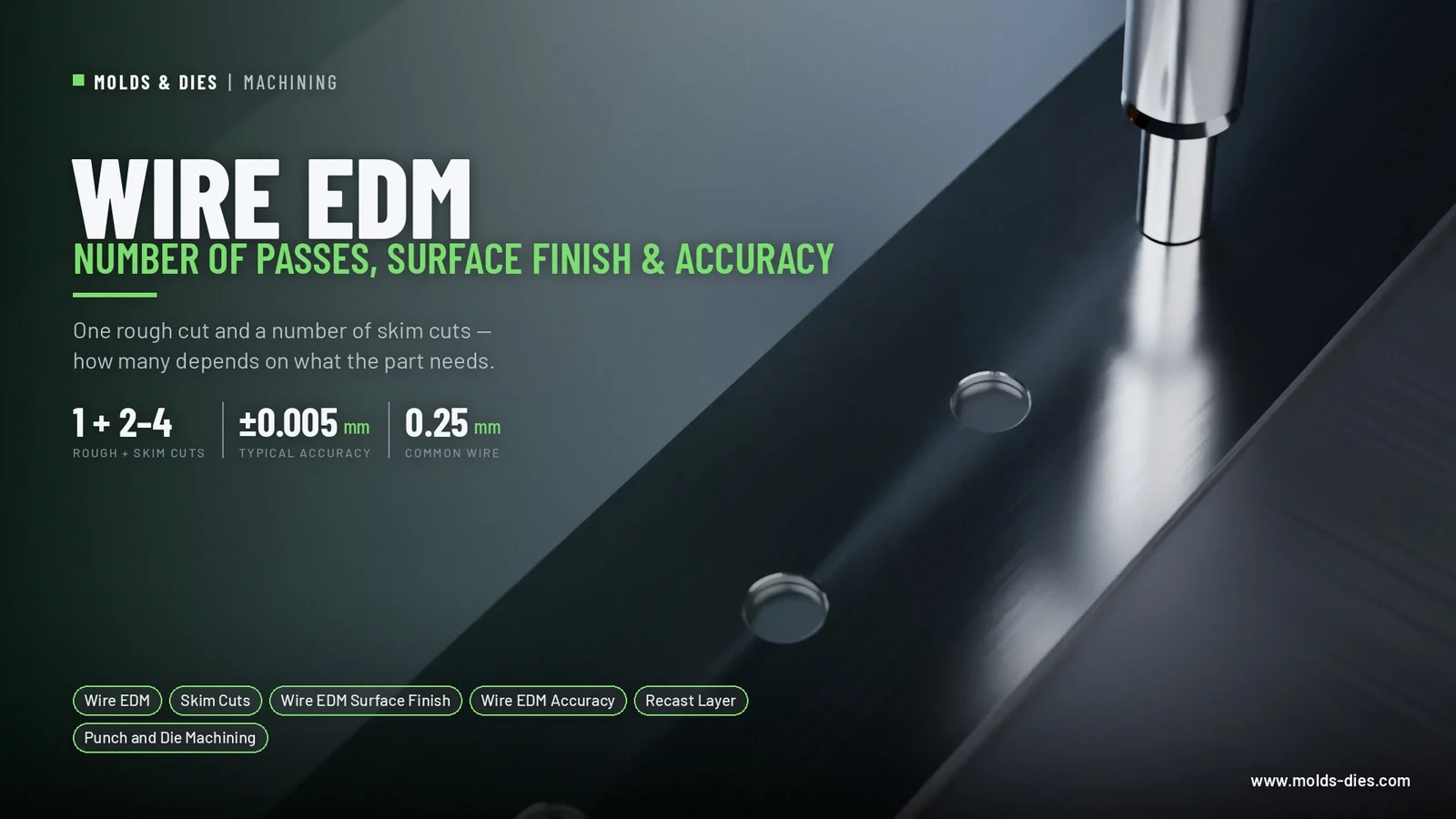
Wire EDM: Number of Passes, Surface Finish and Accuracy

Wire EDM: Number of Passes, Surface Finish and Accuracy

  • Mohamed Aboelfotouh Mohamed Aboelfotouh
  • Sector : Machining
  • Oct. 2, 2026, 6:40 p.m.

Wire EDM cuts punches, die openings, inserts and stripper plates from hardened steel with a thin wire and no cutting force. The accuracy and surface it delivers depend mostly on one decision: how many passes are made. One rough cut is fast and adequate fo ....

Continue Reading
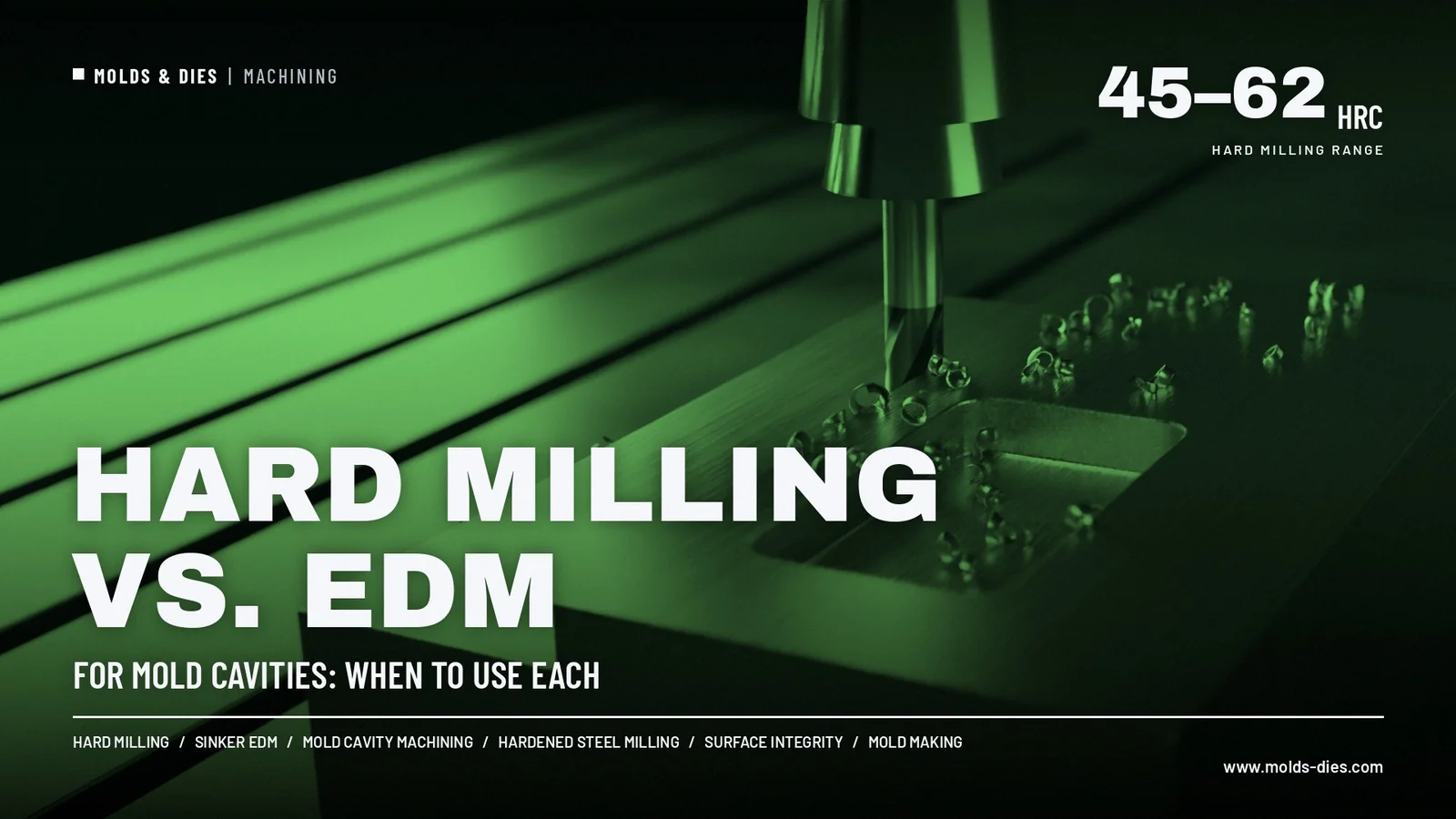
Hard Milling vs. EDM for Mold Cavities: When to Use Each

Hard Milling vs. EDM for Mold Cavities: When to Use Each

  • Mohamed Aboelfotouh Mohamed Aboelfotouh
  • Sector : Machining
  • Oct. 2, 2026, 6:40 p.m.

Twenty years ago, almost every hardened mold cavity was finished by sinker EDM. Today, stiff high-speed machines and coated carbide tools can mill steel at 50–60 HRC to final size and finish. Hard milling is usually faster and leaves a better surfac ....

Continue Reading
Milling Speeds and Feeds: How to Calculate and Adjust

Milling Speeds and Feeds: How to Calculate and Adjust

  • Mohamed Aboelfotouh Mohamed Aboelfotouh
  • Sector : Machining
  • Oct. 2, 2026, 6:39 p.m.

Every milling operation is defined by a small set of numbers: cutting speed, feed per tooth, and the width and depth of cut. Catalogues give recommended values, but the machine needs spindle speed and table feed, and the catalogue values assume a short, r ....

Continue Reading
Punch and Die Steels: Grade, Hardness and Coating by Application

Punch and Die Steels: Grade, Hardness and Coating by Application

  • Mohamed Aboelfotouh Mohamed Aboelfotouh
  • Sector : Sheet Metal
  • Oct. 2, 2026, 6:39 p.m.

Punches and die inserts fail in a small number of ways: they wear, chip, crack, pick up sheet material, or deform. Each failure points to a different property of the tool steel. The usual mistake is to answer every problem with a harder or more expensive ....

Continue Reading
Load more articles

LogBook

Molds & Dies Website offers expert articles on plastic injection molds, sheet metal dies, high-pressure die casting, and aluminum extrusion for enthusiasts and professionals.

Quick Links
  • About
  • Contact
  • Privacy Policy
  • Disclaimer
Subscribe Newsletter

Copyright © 2023-2026 Molds & Dies | All Rights Reserved